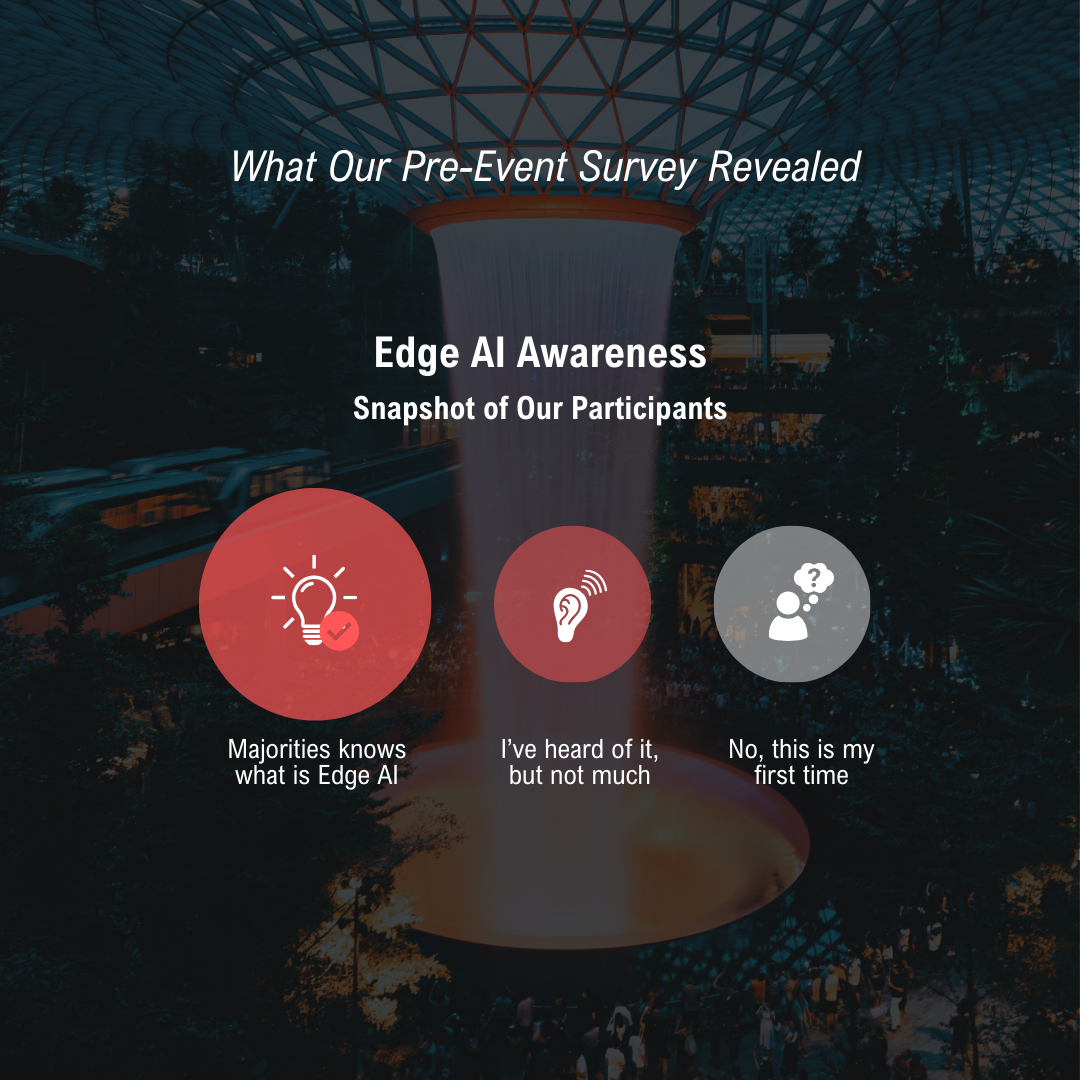
On August 22, 2025, just before IP Week, we held our event Shaping the Future of Legal AI joined by participants from across industries, not only legal, but also finance, RegTech, and more.
We were honored to be joined by Chiew Yu Sarn (Co-Managing Director, Yusarn Audrey LLC) as our guest speaker, alongside our CEO & Founder, Alfred Wu, and Vincent Chen our Senior Growth Manager. Together they shared insights on how AI is reshaping legal practices. The event became a shared conversation on the importance of trust, control, and data privacy, trade-offs between cloud and edge, and how AI can assist professionals while adapting to the evolving compliance needs. Here are the key takeaways and highlights from those discussions.
AI and the Question of Fairness
“When we delegate a function of justice to a machine, is it going to be fair?” That was the question raised by Chiew Yu Sarn to open the discussion. When technology assumes roles tied to people’s rights and responsibilities, society must ask whether those outcomes can truly be trusted.
AI can certainly make work faster and more consistent. But fairness is a different challenge; it depends on empathy and judgment, qualities machines don’t have.
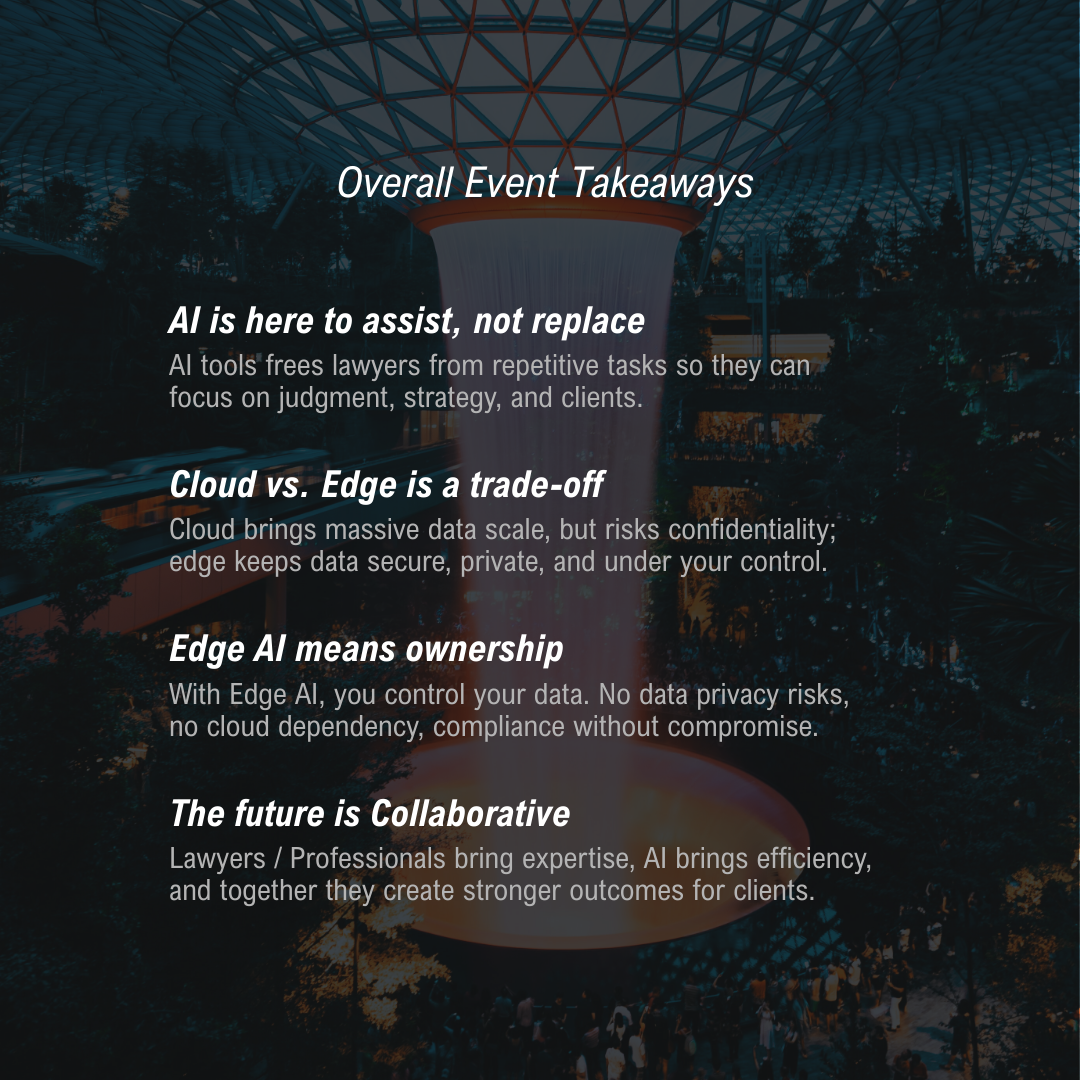
AI’s role in legal practice is not about replacement, but assistance. By taking on repetitive, time-consuming tasks, AI enables lawyers to focus on what matters most: applying judgment, developing strategy, and building stronger relationships with their clients. Beyond questions of fairness, the discussion also turned to the technical choices legal teams face when adopting AI.
Cloud vs. Edge Trade-off
When adopting AI, legal teams face a choice. Cloud offers massive data scale and flexibility, but raises concerns around confidentiality. Edge, by contrast, keeps data secure, private, and under direct control. The right balance depends on each team’s priorities.
Edge AI Means Ownership
Edge AI gives legal professionals true ownership of their tools and data. With no reliance on cloud, it minimizes privacy risks and ensures compliance without compromise for sensitive work to stay fully within the team’s governance. This raised an important point: for legal teams, data governance is not just technical, but central to client trust. As Alfred Wu, CEO & Founder of AIPLUX, emphasized during the event, “Edge AI means your data stays where it belongs, under your governance and in your control.”
The Future is Collaborative
The strongest outcomes won’t come from AI or humans working alone, but from working together. Lawyers bring judgment, ethics, and an understanding of people, while AI adds speed, scale, and the ability to process information with consistency. As Vincent Chen pointed out, trust also depends on transparency. With many cloud-based systems, such as OpenAI, users can’t always be sure whether their data is stored or how it might be used. That uncertainty makes it difficult for legal teams to rely fully on the results, which is why auditability is essential. With transparency, human expertise and AI efficiency can genuinely work side by side
Where We Go from Here
The outlook for legal AI is about responsible adoption of tools that assist without risking privacy, privilege, or regulatory compliance. That’s how legal teams can embrace AI with confidence.
Edge AI makes this possible by keeping sensitive data private, reducing reliance on external cloud services, and ensuring compliance stays fully under your control. Its value extends beyond law into research, academia, finance, healthcare, and other fields where trust and governance are essential.
If you’d like to continue the conversation or explore how Edge AI can securely optimize your work, feel free to reach us at amelia.widjaja@aiplux.com